1. Standard Tamil Keyboard Layout
High resolution image suitable for printing.
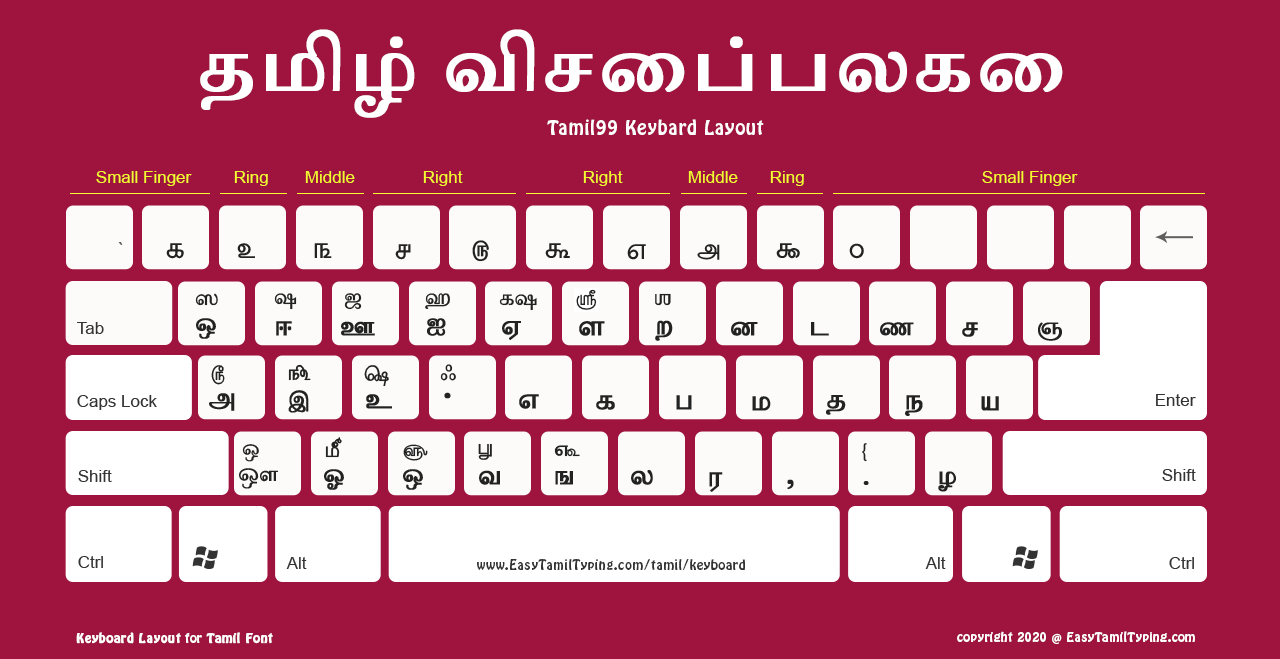
We have five different Tamil keyboard layouts for you to download on your computer. Once downloaded — you can use it as a reference to type in Tamil either on Word document or any other text editor. You also need to download the matching Tamil fonts.
High resolution image suitable for printing.
High resolution image suitable for printing.
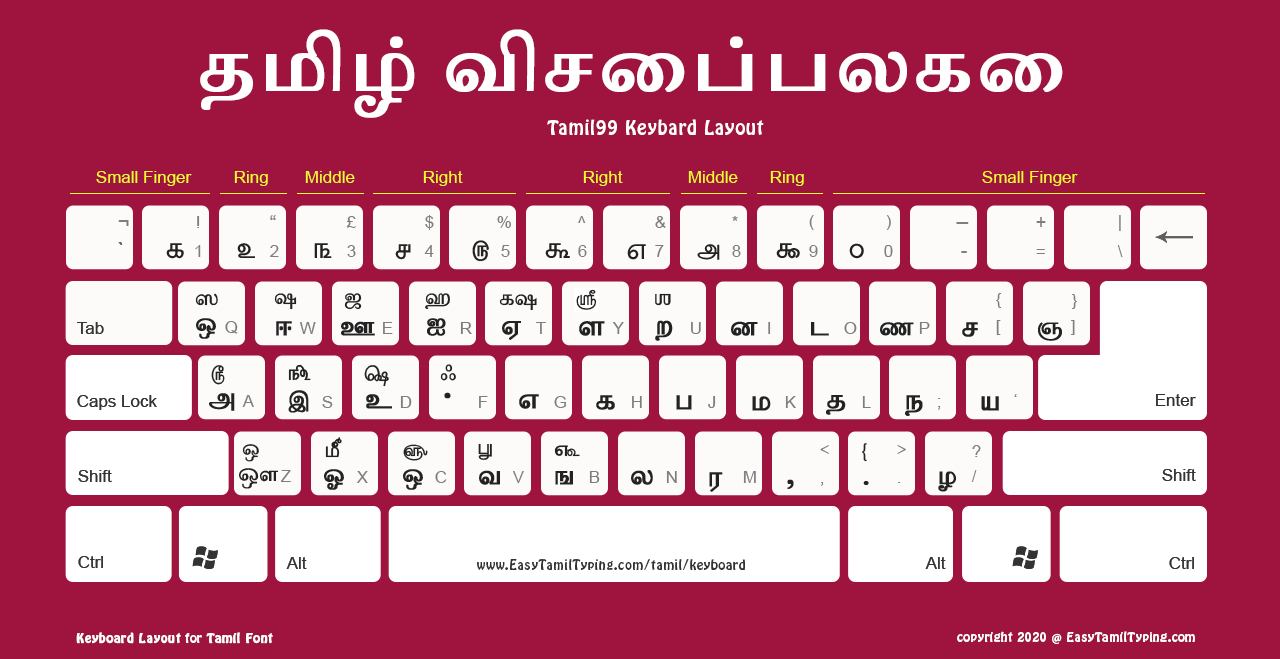
High resolution image suitable for printing.
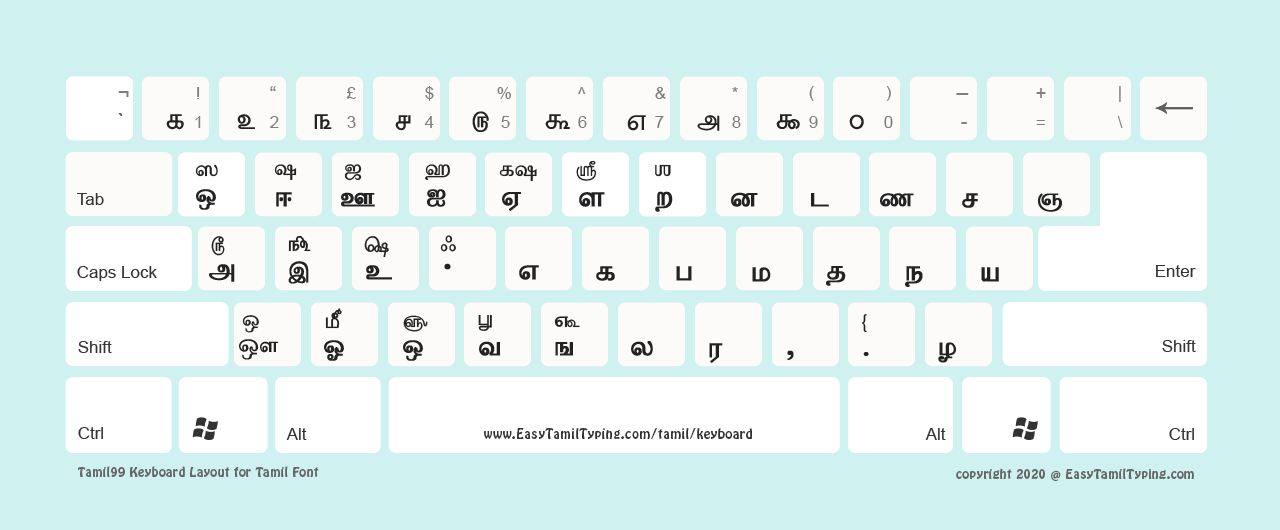
High resolution image suitable for printing.
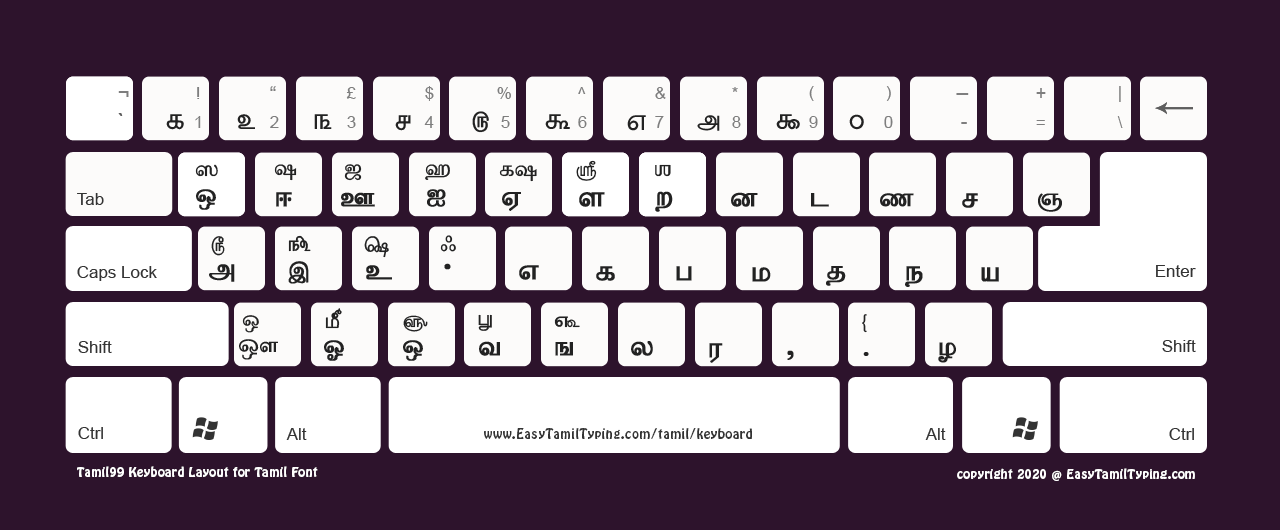
High resolution image suitable for printing.
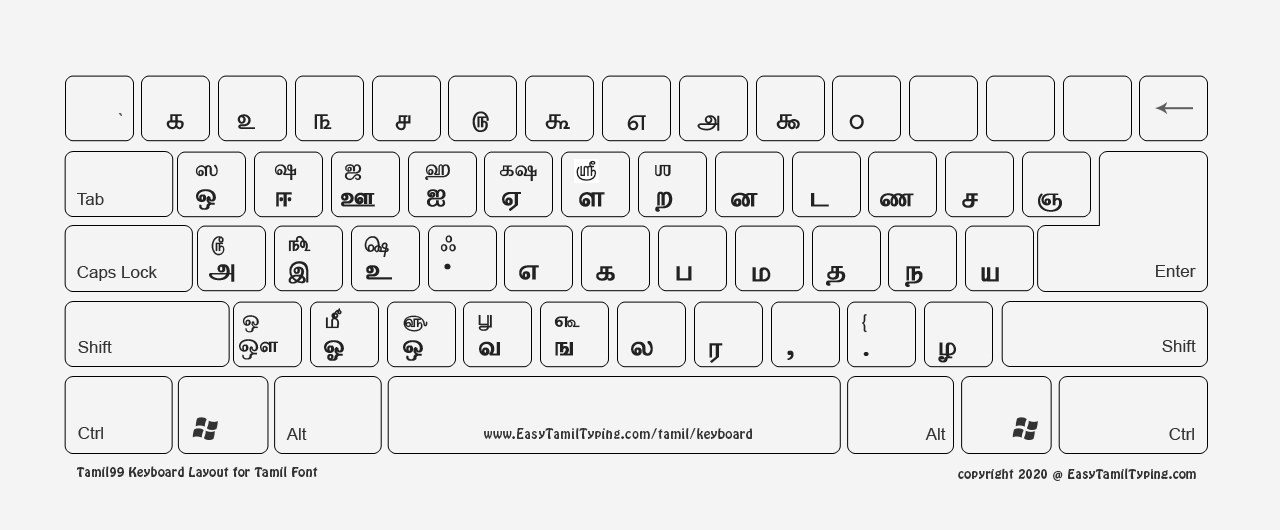
Here's our systematic approach to setting up Tamil typing.
Acquire your Tamil font — browse our curated fonts library and install the ideal typeface for your Tamil writing needs.
Obtain your keyboard reference using this reliable download process:
Click on your preferred keyboard layout from our collection
Right-click when the high-resolution image appears
Choose "Save image as..." and save to your preferred location
Establish your typing environment by opening any word processor and selecting the Tamil font you installed earlier.
Launch your Tamil writing session! Position your keyboard image for easy viewing while you compose beautiful Tamil text.
Expert recommendation: Limited screen space? Our keyboards deliver outstanding print clarity — print one for a reliable desktop reference that's always ready when you need it!
Designed for Tamil99 keyboard layout — accurately mapped to provide an authentic Tamil typing experience with correct character placement.
Meets professional standards — designed for typists, and businesses requiring error-free Tamil documentation.
Supports various display formats — perfect for presentations, reference guides, digital displays, and high-quality printing.
Offers unrestricted licensing — use freely for academic research, commercial projects, educational materials, or personal correspondence.
For practical purposes: (Northern Hemisphere) or September, October, November (Southern Hemisphere).
would say: late March through late June. But this is awkward for calendars. The phenologist would say: it depends on your latitude and the year’s temperature anomaly. But this is too complex for daily life. The meteorologist has won the popular vote. In global weather reporting, climate data analysis, and most everyday conversation in North America and Europe, March, April, and May are now the de facto spring months.
The most honest answer is that spring is not a set of months but a process —a thermal and biological transition that, on a warming planet, is starting earlier and ending no later. The months of spring are not a destination on the calendar. They are a fleeting, shifting boundary line that we humans, desperate for order, have tried to paint in permanent ink on a world made of water and warmth.
However, this victory is hollow. As climate change accelerates, the meteorological definition is becoming increasingly misaligned with lived experience. In many parts of the US and Europe, May now feels like summer (with 30°C/86°F heat waves), while March retains a stubborn winter chill. The three-month block is a relic of a more stable climate. The question “Which are the spring months?” is a Rorschach test for how you view time. If you see time as a celestial clock, you choose the equinox to solstice. If you see it as a data set, you choose March–May. If you see it as a living system, you watch for the first bud.
 Sambhu Raj Singh ·