License Key Dishonored Fixed Page
Discover apps that push the boundaries of iOS.
License Key Dishonored Fixed Page
Abstract The software license key is the most prevalent mechanism for digital entitlement verification. Yet, a significant and often under-discussed phenomenon— License Key Dishonor —undermines its integrity. This paper defines license key dishonor as the failure of a software vendor to honor a valid, non-fraudulent license key due to technical, procedural, or strategic failures. It distinguishes this from traditional piracy (key generation/cracking) and examines the triad of causes: vendor-side revocation errors, hard-coded expiration fallacies, and post-sale feature degradation. Through case studies (e.g., Adobe CS2, Google Nest, Unity Game Engine), this paper argues that license key dishonor erodes consumer trust, creates security vulnerabilities (e.g., forced offline cracking), and represents a form of "technical debt" that eventually harms the vendor more than the putative infringer. 1. Introduction: The Paradox of the Key The license key was designed as a gatekeeper: a string of characters that mathematically proves payment. However, software vendors have increasingly weaponized the key as an instrument of post-sale control . This has led to a new class of failures: where the user possesses a legitimate key, but the vendor’s infrastructure—or the software’s own logic—refuses to honor it.
Abstract The software license key is the most prevalent mechanism for digital entitlement verification. Yet, a significant and often under-discussed phenomenon— License Key Dishonor —undermines its integrity. This paper defines license key dishonor as the failure of a software vendor to honor a valid, non-fraudulent license key due to technical, procedural, or strategic failures. It distinguishes this from traditional piracy (key generation/cracking) and examines the triad of causes: vendor-side revocation errors, hard-coded expiration fallacies, and post-sale feature degradation. Through case studies (e.g., Adobe CS2, Google Nest, Unity Game Engine), this paper argues that license key dishonor erodes consumer trust, creates security vulnerabilities (e.g., forced offline cracking), and represents a form of "technical debt" that eventually harms the vendor more than the putative infringer. 1. Introduction: The Paradox of the Key The license key was designed as a gatekeeper: a string of characters that mathematically proves payment. However, software vendors have increasingly weaponized the key as an instrument of post-sale control . This has led to a new class of failures: where the user possesses a legitimate key, but the vendor’s infrastructure—or the software’s own logic—refuses to honor it.
License Key Dishonored Fixed Page
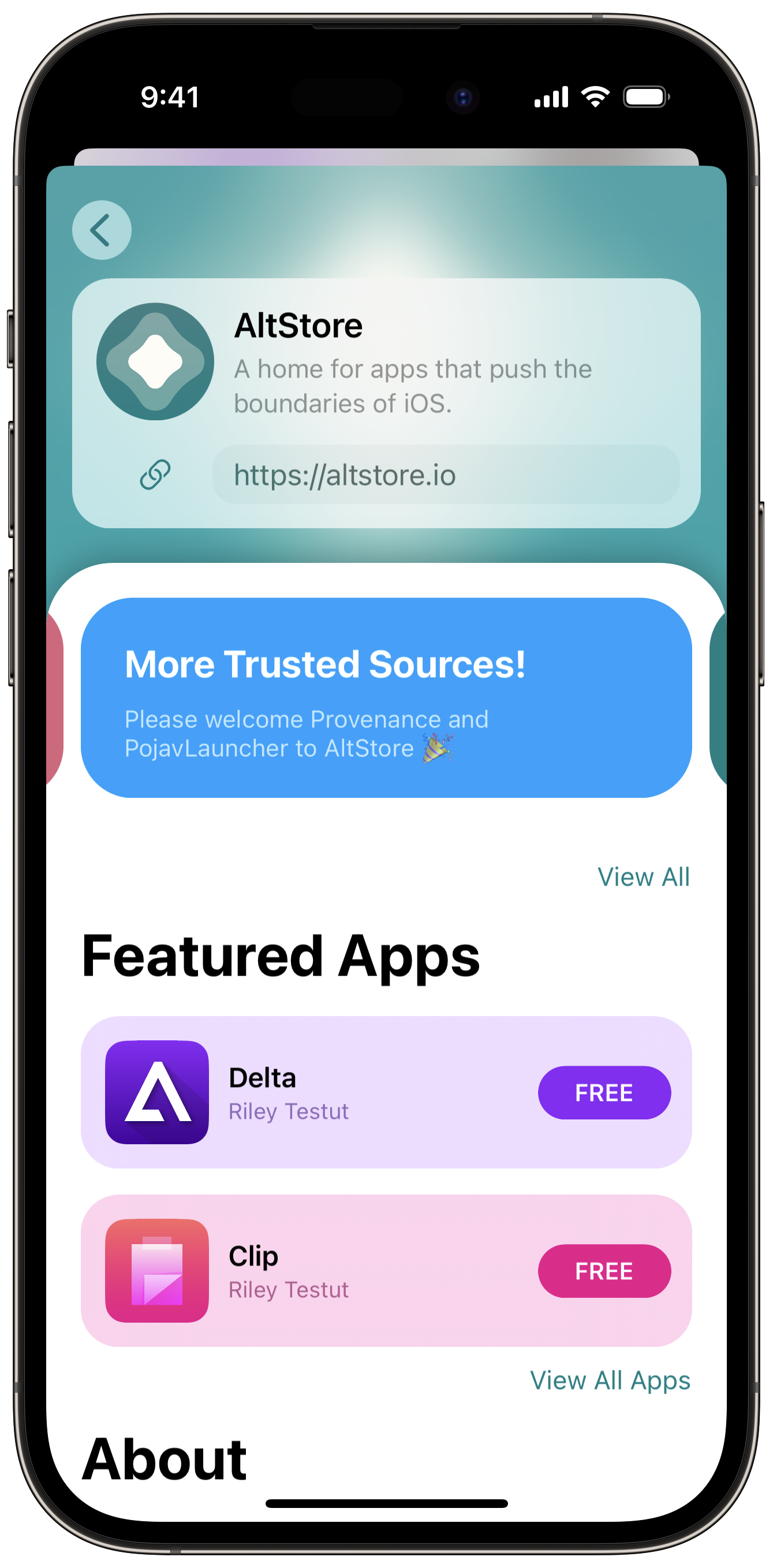
Anyone can distribute their apps with AltStore. All you need is to make a “source”, which you can do by hosting a text file with basic information about your apps. Users can then enter your source URL in AltStore and your apps will automatically appear.
Follow our complete guide to create your own source and start distributing your apps in minutes!
Publish Apps
License Key Dishonored Fixed Page
AltStore is an open-source project developed by a small, dedicated team, and you can follow along with our progress on GitHub.
We’re continuously working on new updates for our apps, and you can try out in-development features by joining our Patreon.
Join Patreon
License Key Dishonored Fixed Page
AltStore, Delta, and Clip are properties of AltStore LLC and are in no way associated with Nintendo Co., Ltd. or Apple Inc.
AltStore Classic
Requires AltServer to install. Follow our step-by-step
Install Guide
“[AltStore] is clever, has been verified by other developers, and the service has an active community of thousands of users who side-load apps on their devices. For the past few weeks, I’ve been one of them.”
License Key Dishonored Fixed Page
AltStore allows apps to exist on iOS that may not otherwise.
Apple doesn't allow all apps on their store, so AltStore gives those apps a chance.